
As we’ve focused on building faith in our family over the past seven years, I’ve watched my children grow from a simple interest in Bible stories and characters to an understanding of bigger faith concepts that directly apply to their lives. To be a part of this beautiful process has been a parenting highlight as we engage in conversations of faith surrounding meal time, post-church car rides and bedtime stories.
Right around the time they learn to read and begin grasping large life concepts learned in school, our children also move from merely reciting Bible story details to memorizing scripture and building a true foundation of faith. While our role as parents will remain the same throughout this faith-building process, our interaction can become much more intentional through each season of growth.
It’s exciting to make Bible stories come alive for our kids so they can apply what they learn to their own lives. But it can feel daunting to find ways to translate history into life applicable encouragement. When sharing the Bible, its stories and key concepts with my children, I’m following these simple steps that I pray will lead them to the TRUTH while building faith that will last for a lifetime.
T – tell the story.
R – remind your child of their place in it.
U – uncover big ideas that apply to their life.
T – take action by modeling and showing your child how to model.
H – hide it in their hearts through memorization and ongoing discussion.
How to Make the Bible Come Alive for Your Kids
T – tell the story.
When we teach our children that the Bible is one, big, epic story, they can begin to connect the dots between each encounter they have with its characters.
R – remind your child of their place in it.
The Bible is God’s story, but it’s also our story. God knew us and loved us from the beginning of creation. Teaching our children that the Bible is their story will help it come alive in their hearts.
U – uncover big ideas that apply to their life.
As we consider each Bible story or faith concept to share, we can ask connecting questions like:
What can my children understand in this story?
What will be hard for them to understand and how can I explain it in their terms?
What lesson or value in this story applies to their season of life?
T – take action by modeling and showing your child how to model.
Purposefully applying each concept to our daily lives will give our children the tools they need to walk out their faith. Our child’s ability to put truth into action starts with our efforts to show them how.
We don’t need to be afraid to say, “I don’t know. Let’s pray about that” or “I’m sorry, I was wrong. What I did does not line up with God’s instructions for living.” Our transparency and humility throughout the growth process will help our children build a healthy expectation of themselves as they grow in their faith.
H – hide it in their hearts through memorization and ongoing discussion.
We can choose a family verse or truth statement to memorize and discuss as we continue to unpack what we’ve learned. When we keep the discussion going and carry it into our everyday lives, our kids begin to see how to apply truth as they are living life.
Faith building is a process, a part of our child’s overall spiritual journey.
Even when it seems like they are not getting it or are too young to understand, we can be encouraged to keep at it by remembering we are planting seeds that will grow into faith.
But remember, the process of making the Bible come alive for our kids is as much about us as it is about them. Our passion to give life to God’s word as we teach it to our kids can fuel our own understanding of truth. This cycle is one of God’s greatest gifts to parents.
What methods or tools are you using to help your kids understand the Bible and grow in faith?

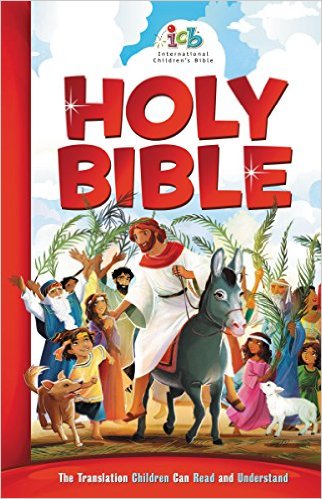 If you are looking for a great kids Bible, check out the International Children’s Bible from our friends at Tommy Nelson. It’s the Bible kids can read and understand. Translated just for children, the ICB includes more than 300 key Bible verses, a topical index, dictionary/concordance, bold subject headings and a large readable format in a 3rd grade reading level!

Hello,
as I read your article on “How to Make the Bible Come Alive for Your Kids” i thought to share a childrens story I wrote and created a powerpoint video that is posted on Youtube. This story is based on the Prodigal Son from the gospel of Luke.
Hope you can find the time to watch!
Looking forward to hearing from you.
Wanda Hernandez